Page 2 of 3
Re: Solstice (Advent) Calendar 2025
Posted: December 5th, 2025, 1:59 am
by Trickster
Advent Calendar Day 4 Taking a Chance with Quant Finance Answers
1. Marking Some Milestones
Match the authors and their models or major concepts with the dates.
a. Thorp – dynamic hedging/options – k. 1968
b. Ho and Lee – yield curve fitting/calibration – l. 1986
c. Bachelier – Random Walks – h. 1900
d. Cox Ross Rubinstein – option pricing simplified – g. 1979
e. Li – Copulas – b. 2000
f. Brown – Brownian motion – d. 1827
g. Fama – Efficient Market Hypothesis – a. 1966
h. Heath Jarrow Morton – yield curves – f. 1992
i. Markowitz – Modern Portfolio Theory – i. 1952
j. Vasicek – short-term interest rates – j. 1977
k. Ito – Ito calculus – e. 1951
l. Black Scholes Merton – option pricing – c. 1973
2. Put–Call Parity Gone Wrong
What is wrong with this not-quite put-call parity equation?
C – K e-r(T-t) = S – P
I switched the K term and the P term, so now it reads:
Call price minus Strike price = Stock price minus Put price
Put-Call Parity should be written as:
C – P = S –K e-r(T-t)
3. Flavors of VaR
Value-at-Risk is one of the most common measures of risk and has spawned several variants.
Which of the following is not a legitimate type of VaR? (At least not yet!)
a. Conditional VaR (CVaR)
b. Marginal VaR (MVaR)
c. Range VaR (RVar)
d. Double Volatility VaR (DVVaR)
e. Liquidity VaR (LVaR)
Possibly a good one for the future though!
4. LIBOR and Its Discontents
Following the highly publicized fixing scandal in 2011/2012, quants went to work on replacing the tarred and feathered LIBOR, with the full phase-out completed in 2023. Which of the models below was not one of the contenders?
a. SOFR
b. SONIA
c. €STR
d. SAURON
e. TONAR
SARON stands for the Swiss Average Rate Overnight, but SAURON is returning to The Lord of the Rings where he belongs!
5. Hedge Fund History: LTCM, 1998
Some hedge funds sagas are so dramatic that numerous papers are written about them. A few even merit books, if not movies. (Would you go to see a movie about LTCM? I would!) In 1998, this was a big deal and still ranks among the most impressive implosions of the 20th century. There were several factors to blame, but which of the following was not a cause of LTCM’s collapse?
a. Russian default
b. Use of leverage
c. The Japanese Yen carry trade
d. Model risk
e. The Royal Dutch Shell trade
LTCM was somewhat affected by the Asian Crisis in 1997, before the real trouble began with the Russkies, but the JPY carry trade did not play a role in that.
6. Hedge Fund History: The Flash Crash of 2010
Twelve years after the LTCM debacle, an even more dramatic event roiled the markets. On May 6, 2010, a “flash crash” took place, with the Dow dropping almost 1,000 points (9%) in just over 30 minutes. Though there was a surprisingly quick rebound the same day, naturally there were investigations, and the SEC/CFTC issued a 104-page report containing controversial explanations later that year. For our purposes here, approximately how much money was “lost” during the crash?
a. $500 million
b. $5 billion
c. $50 billion
d. $500 billion
e. $1 trillion
Would you believe? It makes LTCM look like a game of Tiddly Winks.
7. Measuring Your Performance
All of the following are features of the Sharpe ratio, except one. Which one is fictitious?
a. It compares a fund’s historical returns with a benchmark.
b. It relies on a risk-free rate.
c. The formula calculates volatility via standard deviation and is based on a normal distribution.
d. It handles negative skewness and high kurtosis well.
e. It is one of the most popular methods for measuring performance today.
Sad, but true. Long Live the People of the Schwarzer Schwan!
8. Chasing the Quantum Dream
Several frameworks and programming languages have been designed for quantum computing, with more on the way, no doubt. However, surveying the field right now, which of these is not a current option for your QC projects?
a. Qiskit
b. Cirq
c. Penny Lane
d. Qlicious
e. Q#
Qlicious does look delicious from a QC marketing standpoint, but I made it up!
Of the ones that are real, match them with the entity associated with them.
a. Microsoft – e. Q#
b. Xanadu – c. Penny Lane
c. IBM – Qiskit
d. Amazon – Not part of this group, but they do use Python through their Amazon Braket SDK.
e. Google – b. Cirq
9. Going Greek
For QF newbies, match the Greeks with the proper definition:
a. Delta – f. Measures the rate of change of the option with respect to changes in the underlying’s price.
b. Gamma – e. Measures the sensitivity of the delta with respect to changes in the underlying price.
c. Vega– c. Measures the sensitivity of the option price to volatility.
d. Theta – h. Measures the rate of change of the option price with the passage of time.
e. Rho – a. Measures sensitivity of the option to the interest rate.
f. Vanna – b. Measures the sensitivity of the delta with respect to volatility.
g. Vomma – g. Measures the rate of change to vega as volatility changes.
h. Lambda – d. Measures the percentage change in option value per percentage change in the underlying price.
I hope you all scored 100% here! If not, there are some great resources available to help you. Ask Paul about it!
10. What’s Next?
Your guess is as good as anyone’s, maybe better!
Re: Solstice (Advent) Calendar 2025
Posted: December 5th, 2025, 2:28 am
by Trickster
Advent Calendar Day 5 Talking to the Trees
Re: Solstice (Advent) Calendar 2025
Posted: December 5th, 2025, 9:41 am
by Paul
They are getting easier! Thanks!
Re: Solstice (Advent) Calendar 2025
Posted: December 5th, 2025, 3:24 pm
by Trickster
They are getting easier! Thanks!
Ha ha! Maybe
too easy for the founding members of this forum.
In any case, this evening we will go back to the natural world and see what we can find!
Re: Solstice (Advent) Calendar 2025
Posted: December 5th, 2025, 9:50 pm
by Trickster
Advent Calendar Day 5 Talking to the Trees Answers
Here are the trees in the find-a-word puzzle:
BalsamFir; Banyan; Baobab; Beech; Cherry; EnglishOak; EuropeanAsh; Gingko; Larch; Magnolia; Olive; Redwood; Sequoia; SilverBirch; Spruce; SugarMaple; Sycamore; WhitePine; Willow
I don't know why some images post sideways, but I tried to fix the previous one to no avail. So, onward and upward!
(The good news is: if you do click on the attachment, it turns right side up.)
Re: Solstice (Advent) Calendar 2025
Posted: December 6th, 2025, 12:24 am
by Trickster
Advent Calendar Day 6 Solid as a Rock
Match them up!
1. Black as coal
2. Pewter white to tarnished gray, are you pro- or?
3. Honey-toned; prehistoric insects and plants are sometimes preserved in it.
4. Lustrous liquid metal, sci-fi film star!
5. Red to orange, sometimes with a cloudy white appearance
6. Glazed blue, greenish or violet; may be spotted
7. Azure blue to apple green; a favorite in the ancient Americas and elsewhere
8. Emerald green to greenish black; sometimes resembles the rings of a tree
9. Brassy yellow, but a precious metal it is not – don’t be fooled!
10. Milky white with green, brown, or red streaks; translucent
a. Mercury
b. Fire Opal
c. Turquoise
d. Malachite
e. Anthracite
f. Pyrite
g. Moss Agate
h. Antimony
i. Lapis Lazuli
j. Amber
Re: Solstice (Advent) Calendar 2025
Posted: December 6th, 2025, 8:49 am
by tags
Someone help!
1 → e
2 →
3 → j
4 → a
5 → b
6 → i
7 → c
8 →
9 →
10 →
Re: Solstice (Advent) Calendar 2025
Posted: December 6th, 2025, 9:32 pm
by Trickster
Advent Calendar Day 6 Solid as a Rock
Match them up!
1. Black as coal – e. Anthracite
2. Pewter white to tarnished gray, are you pro- or? – h. Antimony
3. Honey-toned; prehistoric insects and plants are sometimes preserved in it. – j. Amber
4. Lustrous liquid metal, sci-fi film star! – a. Mercury
5. Red to orange, sometimes with a cloudy white appearance – b. Fire Opal
6. Glazed blue, greenish or violet; may be spotted – i. Lapis Lazuli
7. Azure blue to apple green; a favorite in the ancient Americas and elsewhere – c. Turquoise
8. Emerald green to greenish black; sometimes resembles the rings of a tree – d. Malachite
9. Brassy yellow, but a precious metal it is not – don’t be fooled! – f. Pyrite (aka "Fool's Gold")
10. Milky white with green, brown, or red streaks; translucent – g. Moss Agate
tags did a good job there - all correct and had a reasonable chance of guessing the remaining 4 correctly.
Malachite example
Re: Solstice (Advent) Calendar 2025
Posted: December 6th, 2025, 9:38 pm
by Trickster
Other examples:
Moss Agate; Pyrite; Antimony
Re: Solstice (Advent) Calendar 2025
Posted: December 7th, 2025, 4:50 am
by Trickster
Advent Calendar Day 7 It’s Only Logical
Logic is the beginning of wisdom, not the end. – Leonard Nimoy
1. The Big Picture
There are several main categories of logic systems and many subcategories. Which of the following is not a system of either type?
a. Aristotelian
b. Classical
c. Modal
d. Syntactical Polemical
e. Deviant
f. Paraconsistent
2. Making the Connection
Propositional logic relies on a series of simple statements, or premises, combined with logical connectives to lead to a conclusion. Which of the following are not logical connectives?
a. If
b. Then
c. If and only if
d. Non solum sed etiam
e. Not
f. And/Nand
g. Or/Nor
h. Xor/Xnor
3. A Little Look at Logicians
Match them up!
1. He was humorously mocked in Voltaire’s Candide
2. His problem-solving principle cuts like a knife
3. Through a glass darkly
4. Focusing on axioms, curves, and surfaces (among other things), he often wrote in Italian or Latin sine flexion
5. Tragic father of theoretical computer science
6. Introduced the concept of Eulerian circles in 1880
7. Pioneer of set theory, his Continuum hypothesis became the first of David Hilbert’s 23 problems announced in 1900
8. Developed in the 1800s, his binary logic laid a foundation for the Information Age
9. Co-author of Principia Mathematica and founder of the school of process philosophy
10. American father of pragmatism and semiotics, also active in the history of science, probability, statistics, and metaphysics
a. George Boole
b. Alan Turing
c. Alfred North Whitehead
d. Georg Cantor
e. Gottfried Wilhelm Leibniz
f. C. S Peirce
g. Giuseppe Peano
h. William of Ockham
i. Lewis Carroll
j. John Venn
4. The Truth about Fallacies
Which one is not a type of informal fallacy?
a. Ad hominem
b. Red herring
c. False dilemma
d. Straw man
e. Convex reasoning
f. Slippery slope
5. The Point of the Paradox
Match them up and give an example for each one:
1. Catch-22
2. Hempel’s Paradox
3. Ship of Theseus
4. Russell’s Paradox
a. If you take out various components of a structure and replace them all one at a time, is it or is it not the same structure? Can you build a second structure from the left-over parts? Is that one the same one as the original?
b. Does the set of all sets that do not contain themselves contain itself?
c. A situation where you need something that you can only obtain by not needing it.
d. Seeing a green apple increases the likelihood that all ravens are black.
5. The Paradox of the Long-Short Weekend
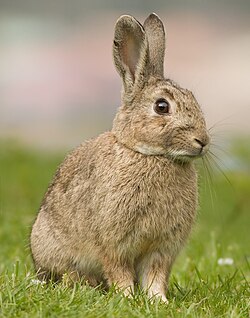
Time seems to fly on the weekends, so here is one to ponder; when you jump into this rabbit hole, time seems to slow down for sure!
Einstein–Podolsky–Rosen Paradox
Background reading:
Can Quantum-Mechanical Description of Physical Reality Be Considered Complete?
A. Einstein, B. Podolsky, and N. Rosen (1935)
https://journals.aps.org/pr/pdf/10.1103/PhysRev.47.777 (one click to download pdf)
or at CERN:
https://cds.cern.ch/record/405662/files/PhysRev.47.777.pdf
Discussion of Experimental Proof for the Paradox of Einstein, Rosen, and Podolsky
D. Bohm and Y. Aharonov (1957)
https://www.informationphilosopher.com/solutions/scientists/bohm/Bohm_Aharonov.pdf
On the Einstein Podolsky Rosen Paradox
S. Bell (1964)
https://cds.cern.ch/record/111654/files/vol1p195-200_001.pdf
Bonne weekend!
- rabbit.jpg (22.77 KiB) Viewed 110 times
Re: Solstice (Advent) Calendar 2025
Posted: December 7th, 2025, 7:14 pm
by Trickster
Advent Calendar Day 7 It’s Only Logical Answers
Logic is the beginning of wisdom, not the end. – Leonard Nimoy
1. The Big Picture
There are several main categories of logic systems and many subcategories. Which of the following is not a system of either type?
a. Aristotelian
b. Classical
c. Modal
d. Syntactical Polemical
e. Deviant
f. Paraconsistent
You might think Deviant or Paraconsistent, but those are: 1) systems that reject classical logic conventions and offer alternatives (Deviant), and 2) a subset of Deviant systems that can handle contradictions, based on the idea that reality can be contradictory. I made Syntactical Polemical up, but if you ask for an AI overview, it offers this explanation: “Essentially, the phrase describes the application of a controversial or combative approach to the rules of sentence structure.” Useful in some of the historic/histrionic arguments around here!
2. Making the Connection
Propositional logic relies on a series of simple statements, or premises, combined with logical connectives to lead to a conclusion. Which of the following are not logical connectives?
a. If
b. Then
c. If and only if
d. Non solum sed etiam
e. Not
f. And/Nand
g. Or/Nor
h. Xor/Xnor
A phrase which means “Not only but also” in Latin. So, it may look formal and impressive, but it is nothing in the world of propositional logic.
3. A Little Look at Logicians
Match them up!
1. He was humorously mocked in Voltaire’s Candide – e. Gottfried Wilhelm Leibniz
“Only the best in the best of all possible worlds!”
2. His problem-solving principle cuts like a knife – h. William of Ockham/Ockham’s Razor
3. Through a glass darkly – i. Lewis Carroll (A slightly tilted reference to his follow on book to Alice in Wonderland.
4. Focusing on axioms, curves, and surfaces (among other things,), he often wrote in Italian or Latin sine flexion – g. Giuseppe Peano. Latin s.f. is a simplified version of Latin he created around 1903.
5. Tragic father of theoretical computer science – b. Alan Turing
6. Introduced the concept of Eulerian circles in 1880 – j. John Venn (Eulerian circles more commonly known now as Venn Diagrams!)
7. Pioneer of set theory, his Continuum hypothesis became the first of David Hilbert’s 23 problems announced in 1900 – d. Georg Cantor
8. Developed in the 1800s, his binary logic laid a foundation for the Information Age – a. George Boole
9. Co-author of Principia Mathematica and founder of the school of process philosophy – c. Alfred North Whitehead, with co-author Bertrand Russell
10. American father of pragmatism and semiotics, also active in the history of science, probability, statistics, and metaphysics – f. C.S. Peirce
4. The Truth about Fallacies
Which one is not a type of informal fallacy?
a. Ad hominem
b. Red herring
c. False dilemma
d. Straw man
e. Convex reasoning
f. Slippery slope
Circular reasoning would be a legitimate answer, but convex reasoning belongs to the realm of convex functions in mathematics and optimization.
5. The Point of the Paradox
Match them up and give an example for each one:
1. Catch-22 – c. A situation where you need something that you can only obtain by not needing it.
A rule of life, really.
2. Hempel’s Paradox – d. Seeing a green apple increases the likelihood that all ravens are black.
Also known as “Hempel’s Ravens.” This is a fun one.
3. Ship of Theseus – a. If you take out various components of a structure and replace them all one at a time, is it or is it not the same structure? Can you build a second structure from the left-over parts? Is that one the same one as the original?
I have two sail boats like that and they are almost identical, but not perfectly.
4. Russell’s Paradox – b. Does the set of all sets that do not contain themselves contain itself?
Don’t lose any sleep over this one!
5. The Paradox of the Long-Short Weekend
Time seems to fly on the weekends, so here is one to ponder; when you go down this rabbit hole, time seems to slow down for sure!
Einstein–Podolsky–Rosen Paradox
Background reading:
Can Quantum-Mechanical Description of Physical Reality Be Considered Complete?
A. Einstein, B. Podolsky, and N. Rosen (1935)
https://journals.aps.org/pr/pdf/10.1103/PhysRev.47.777 (one click to download pdf)
or at CERN:
https://cds.cern.ch/record/405662/files/PhysRev.47.777.pdf
Discussion of Experimental Proof for the Paradox of Einstein, Rosen, and Podolsky
D. Bohm and Y. Aharonov (1957)
https://www.informationphilosopher.com/solutions/scientists/bohm/Bohm_Aharonov.pdf
On the Einstein Podolsky Rosen Paradox
S. Bell (1964)
https://cds.cern.ch/record/111654/files/vol1p195-200_001.pdf
If you enjoy this sort of thing, The Stanford Encyclopedia of Philosophy has a nice entry, with notes on papers about EPR up through 2017. See https://plato.stanford.edu/entries/qt-epr/.
You could also have a look at “Einstein’s 1935 papers: EPR=ER?” by Gerd Christian Krizek at the University of Vienna on arXiv: https://arxiv.org/pdf/1704.04648. This paper focuses on the logical aspects of the Paradox, the philosophy of science, and comments on the modern literature.
And, of course, dozens to be found elsewhere.
The next Calendar entry will come out tomorrow.
Re: Solstice (Advent) Calendar 2025
Posted: December 8th, 2025, 1:06 pm
by Trickster
Advent Calendar Day 8 Sugar and Spice and Everything Nice
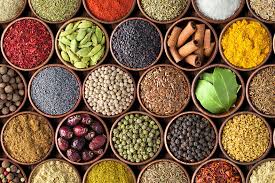
After all that dry logic, it's time for something tasty! Find the spices - there are a lot of them!
- spices.jpeg (18.84 KiB) Viewed 91 times
Re: Solstice (Advent) Calendar 2025
Posted: December 8th, 2025, 10:44 pm
by Trickster
Advent Calendar Day 8 Sugar and Spice and Everything Nice Answers
Here are all of the spices contained in the puzzle:
Allspice;Anise;Asafoetida;
Basil;BayLeaf;BlackPepper;
CarawaySeed;Cardamom;CayennePepper;Chervil;Chives;
Cilantro;Cinnamon;Cloves;Coriander;Cumin;CurryLeaf;
Dill;Fennel;Fenugreek;GaramMasala;Garlic;Ginger;
Lavender;LemonBalm;Licorice;
Mace;Marjoram;Mint;MustardSeed;NigelaSeed;Nutmeg;Onion;
OrangePeel;Oregano;PanchPhoran;Paprika;Parsley;Peppermint;PoppySeeds;
RasElHanout;RedChiliPowder;Rosemary;
Saffron;Sage;Salt;SesameSeeds;
Spearmint;Sumac;SummerSavory;
Tarragon;Thyme;Turmeric;
Wasabi;WhitePepper;Zaatar
Bon apetit!
Re: Solstice (Advent) Calendar 2025
Posted: December 9th, 2025, 3:10 pm
by Trickster
Advent Calendar Day 9 Taking a Path through the History of Math
1. A Sign for Nothing
Across civilizations, several early counting systems arose as evidenced by notches on bones, knot systems (quipu), dice, clay tablets, and papyrus. However, most were slow to account for one central figure. Which civilization was the first to make use of zero?
a. Babylonian
b. Eqyptian
c. Greek
d. Indian
2. A Dangerous Idea
The Greeks developed many of the mathematical concepts we use today. However, one in particular was highly controversial and may have even led to death by drowning for the man who proposed it. What was the concept, why was it dangerous, and who was the man?
a. Negative numbers
b. Pi
c. The square root of 2
d. The Golden Ratio
e. Zero
a. Diogenes
b. Milo of Croton
c. Hippasus
d. Pythagoras
3. Prime Movers
One of these mathematicians did not spend his time on the primes. Which one?
a. Euclid
b. Eratosthenes
c. Diocles
d. Mersenne
4. Neatly Boxed
What is the object below and what are its special properties?
(Pretend these are in a box)
16 – 3 – 2 – 13
5 – 10 – 11 – 8
9 – 6 – 7 – 12
4 – 15 – 14 – 1
5. Strange Objects
How would you describe each of the following objects?
a. Cissoid
b. Loxodrome
c. Cardioid
d. Astroid
6. The Knight’s Tour
A chess knight is tasked with jumping once and only once to each square on an 8x8 chessboard. Is it possible? Try it out!
7. Four-Dimensional Dynamics
Which of the following statements are true about Quaternions?
a. They are four dimensional numbers.
b. They were discovered or conceived by William Hamilton in the mid-1800s.
c. They are related to the dynamics of motion in three dimensions.
d. They are useful in various areas of modern technology, including computer graphics, signal processing, and bioinformatics.
e. They play a role in astrophysics research concerning black holes.
f. All of the above.
8. Elusive Solutions
In 1900, David Hilbert described 23 mathematical problems to form an agenda for research in the 20th century. Which of the following have been solved (to general satisfaction) so far?
a. Given any two polyhedra of equal volume, is it always possible to cut the first into finitely many polyhedral pieces that can be reassembled to yield the second? (Problem 3)
b. Is the ring of invariants of an algebraic group acting on a polynomial ring always finitely generated? (Problem 14)
c. Are there only finitely many essentially different space groups in n-dimensional Euclidean space? (Problem 18a)
d. Is there a polyhedron that admits only an anisohedral tiling in three dimensions? (Problem 18b)
e. What is the densest sphere packing? (Problem 18c)
f. Are the solutions of regular problems in the calculus of variations always necessarily analytic? (Problem 19)
g. Do all variational problems with certain boundary conditions have solutions? (Problem 20)
9. Math as a Decorative Art
What are the names of these two patterns?
Posted: December 9th, 2025, 10:16 pm
by Trickster
Advent Calendar Day 9 Taking a Path through the History of Math Answers
1. A Sign for Nothing
Across civilizations, several early counting systems arose as evidenced by notches on bones, knot systems (quipu), dice, clay tablets, and papyrus. However, most were slow to account for one central figure. Which civilization was the first to make use of zero?
a. Babylonian
b. Eqyptian
c. Greek
d. Indian
The Babylonians used a double wedge symbol to denote an empty space in their base-60 system (around 300 BCE) and the Mayans also had a symbol (a shell) for it in their base-20 system, (around 400 BCE), but it was not considered a number in itself. The first known calculations come from India, with Aryabhata (5th c. CE). By the 7th century CE, it was clearly in use, as Brahmagupta included it his text Brahmasphutasiddhanta, where he defined rules for addition, subtraction, and multiplication with zero.
2. A Dangerous Idea
The Greeks developed many of the mathematical concepts we use today. However, one in particular was highly controversial and may have even led to death by drowning for the man who proposed it. What was the concept, why was it considered dangerous, and who was the man?
a. Negative numbers
b. Pi
c. The square root of 2
d. The Golden Ratio
e. Zero
Why was it considered dangerous?
It is an irrational number, which challenged the Greek belief that the entire universe could be understood through whole numbers and their ratios (rational numbers).
a. Diogenes
b. Milo of Croton
c. Hippasus
d. Pythagoras
The drowning story may have been a myth, but the Pythagoreans certainly were secretive about the existence of irrational numbers.
3. Prime Movers
One of these mathematicians did not spend time on the primes. Which one?
a. Euclid
b. Eratosthenes
c. Diocles
d. Mersenne
Diocles focused on parabolas and is known for a curve called the Cissoid, which he used to solve the problem of doubling the cube (the “Delian problem”).
4. Neatly Boxed
What is the object below and what are its special properties?
16 – 3 – 2 – 13
5 – 10 – 11 – 8
9 – 6– 7 – 12
4 – 15 – 14 – 1
It is a Magic Square, a grid of numbers where each row, column, and both main diagonals add up to the same "magic constant.
5. Strange Objects
How would you describe each of the following objects?
a. Cissoid – A cubic plane curve notable for the property that it can be used to construct two mean proportionals to a given ratio.
b. Loxodrome – Also known as a rhumb line, a loxodrome is a path on the Earth's surface that crosses all meridians (lines of longitude) at the same constant angle.
c. Cardioid – A heart-shaped curve in geometry, formed by one point on a circle rolling around a fixed circle of the same radius, known as a 1-cusped epicycloid.
d. Astroid – A hypocycloid with four cusps, like a four-pointed star. Its form is created by a point on a circle rolling inside a larger circle with four times its radius, or the envelope of a line segment with fixed length sliding between two axes.
6. The Knight’s Tour
A chess knight jumps once and only once to each square on an 8x8 chessboard. Is it possible? Try it out!
Yes, it can be done and has been a favorite chess problem for centuries. If the knight ends on a square that is one knight's move from the beginning square, the tour is “closed” or “re-entrant”; otherwise, it is “open.” On an 8 × 8 board, there are 26,534,728,821,064 directed closed tours.
7. Four-Dimensional Dynamics
Which of the following statements are true about Quaternions?
a. They are four dimensional numbers.
b. They were discovered or conceived by William Hamilton in the mid-1800s.
c. They are related to the dynamics of motion in three dimensions.
d. They are useful in various areas of modern technology, including computer graphics, signal processing, and bioinformatics.
e. They play a role in astrophysics research concerning black holes.
f. All of the above.
AI provides this answer:
“Quaternions are four-dimensional number systems that extend complex numbers, used primarily to represent 3D rotations in computer graphics, robotics, and physics, avoiding issues like gimbal lock. They have a real part and three imaginary parts (i, j, k), allowing them to encode orientation efficiently, though their multiplication isn't commutative (order matters). A unit quaternion can represent a rotation of a specific angle around a specific axis, making them superior to Euler angles for smooth, stable 3D transformations.”
8. Elusive Solutions
In 1900, David Hilbert described 23 mathematical problems to form an agenda for work in the 20th century. Which of the following have been solved to general satisfaction so far?
a. Given any two polyhedra of equal volume, is it always possible to cut the first into finitely many polyhedral pieces that can be reassembled to yield the second? (Problem 3)
Resolved and the answer this problem is no. See Dehn invariants.
b. Is the ring of invariants of an algebraic group acting on a polynomial ring always finitely generated? (Problem 14)
Resolved and the answer to this problem is no. See counterexample by Masayoshi Nagata.
c. Are there only finitely many essentially different space groups in n-dimensional Euclidean space? (Problem 18a)
Resolved and the answer is yes. See Ludwig Bieberbach.
d. Is there a polyhedron that admits only an anisohedral tiling in three dimensions? (Problem 18b)
Resolved and the answer is yes. See Karl Reinhardt.
e. What is the densest sphere packing? (Problem 18c)
Generally accepted as resolved and the answer is approximately 74%. See Thomas Callister Hales, with computer-assist.
f. Are the solutions of regular problems in the calculus of variations always necessarily analytic? (Problem 19)
Resolved and answer is yes. See independent work by Ennio de Georgi and John Nash.
g. Do all variational problems with certain boundary conditions have solutions? (Problem 20)
This is said to be partially resolved, with solutions for some cases. But fully resolved? Not yet!
In summary, yes, to all but the last one listed here, and there are others not mentioned here, of course. So, in your spare time…!
A few helpful references:
Overview by the Simons Foundation:
https://www.simonsfoundation.org/2020/05/06/hilberts-problems-23-and-math/
Hilbert’s original (1900) lecture, text hosted at Clark University (via faculty member David Joyce):
http://aleph0.clarku.edu/~djoyce/hilbert/problems.html
Further discussion with many links and references at Wolfram MathWorld:
https://mathworld.wolfram.com/HilbertsProblems.html
9. Math as a Decorative Art
What are the names of these two patterns?
Penrose Tiling – A form of aperiodic tiling covering the plane with non-overlapping polygons or other shapes. The original form of Penrose tiling used four different shapes, but there are forms that use only two: either two different rhombi, or two different quadrilaterals, called kites and darts.
E8 – The Lie group E8 is an exceptional and highly complex mathematical structure, known for its elegance and symmetry. This group is unique among simple compact Lie groups in that its non-trivial representation of smallest dimension is the adjoint representation of dimension 248 acting on the Lie algebra E8. It also has the following unique properties: trivial center, compact, simply connected, and simply laced (all roots have the same length).
Side note: When I was a child, my parents gave me a large Spirograph set for Christmas one year. I spent many hours creating images like this in a wide range of color combinations, though I suppose I never reached dimension 248! I still like the form very much.
For your enjoyment, here is a Penrose Tile Generator.
At some point I will make a Penrose Tile Quilt. The pattern can be used in knitting too, but that is a lot of work!